Shuffle the number cards
Mix all coloured square cards thoroughly before arranging the board.
Build the board, reveal a target and use three neighbouring number cards to create the correct mathematical result before your opponents do.
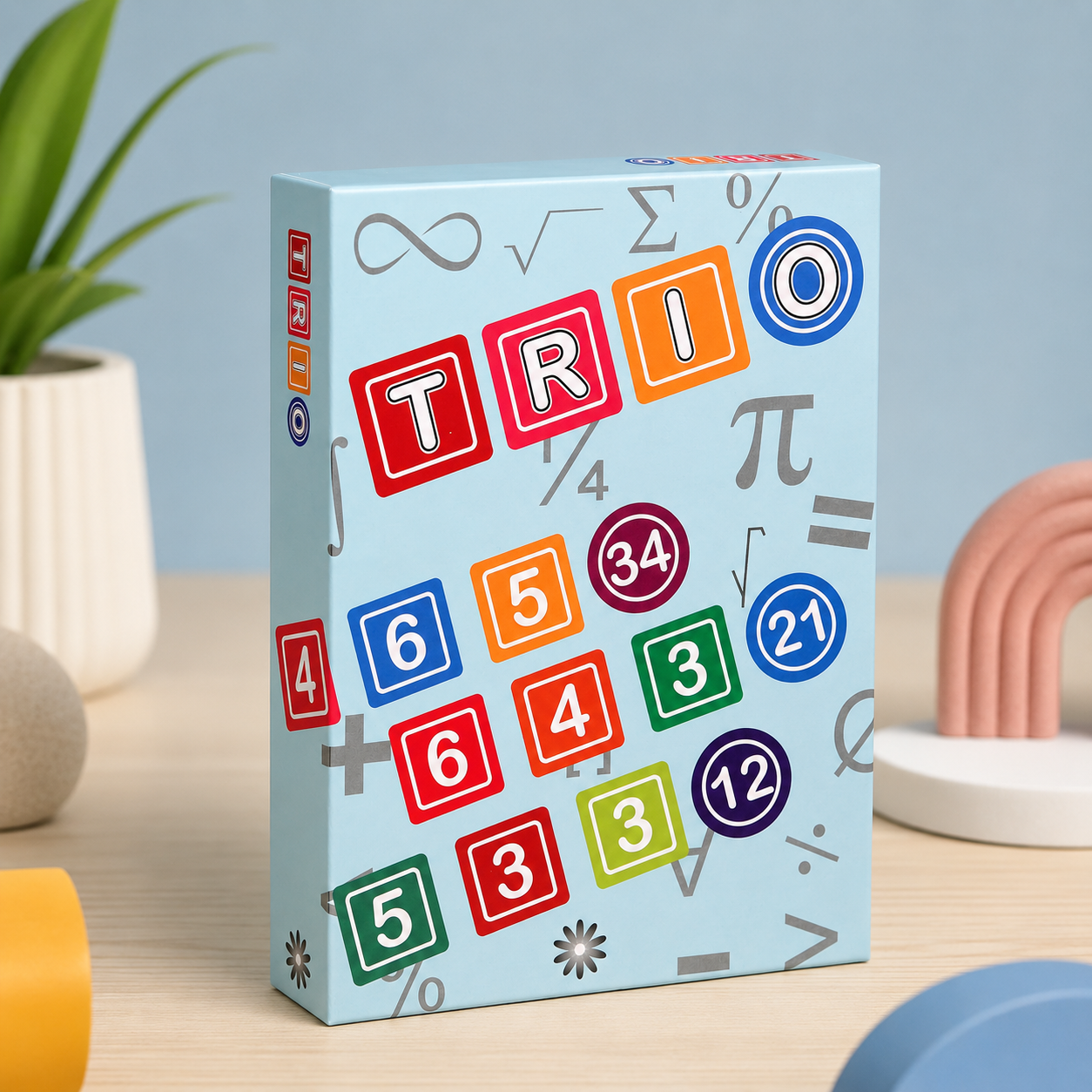 MATHEMATICAL STRATEGY GAME
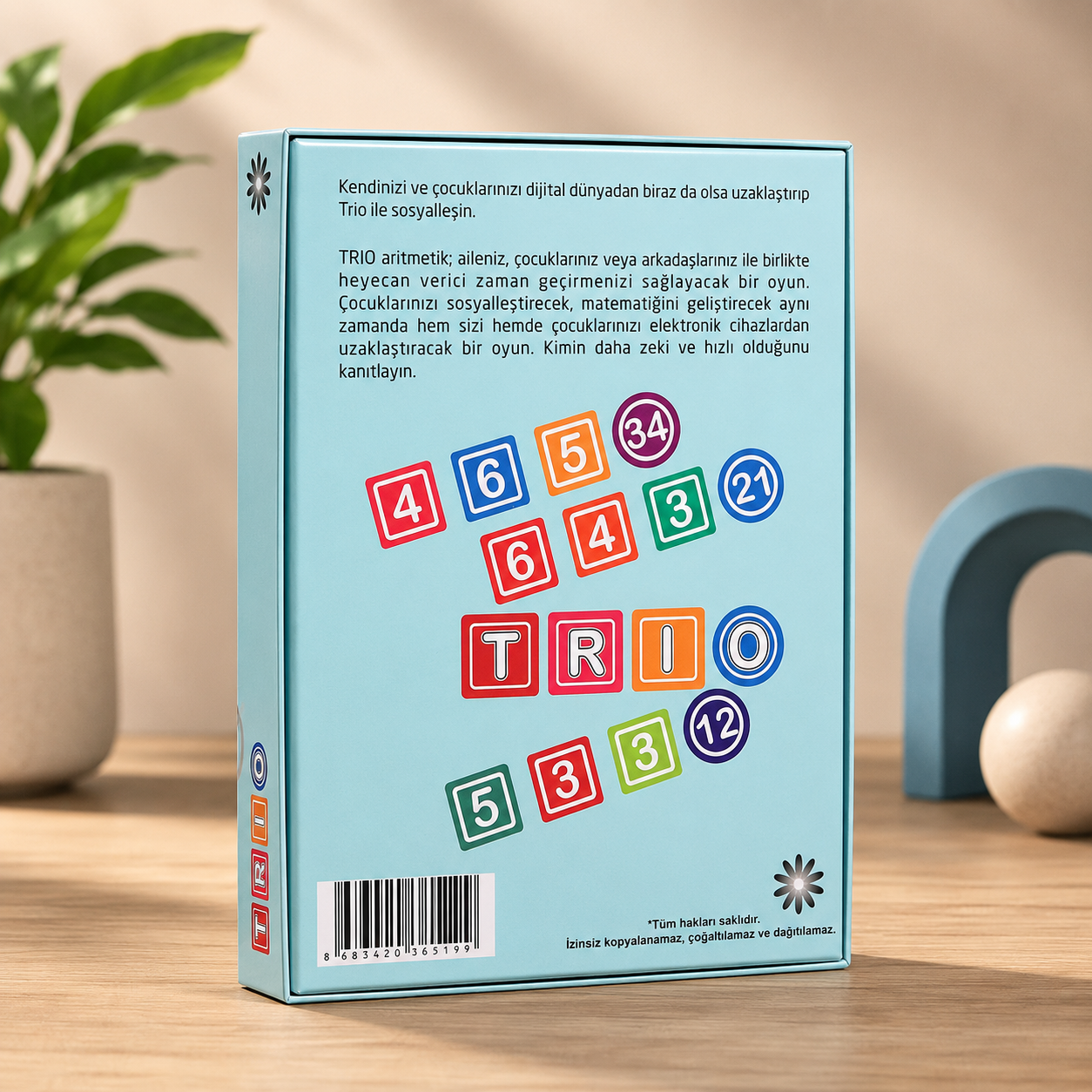
Trio uses coloured number cards and round blue target cards to create a fast, visual and strategic mathematics game.
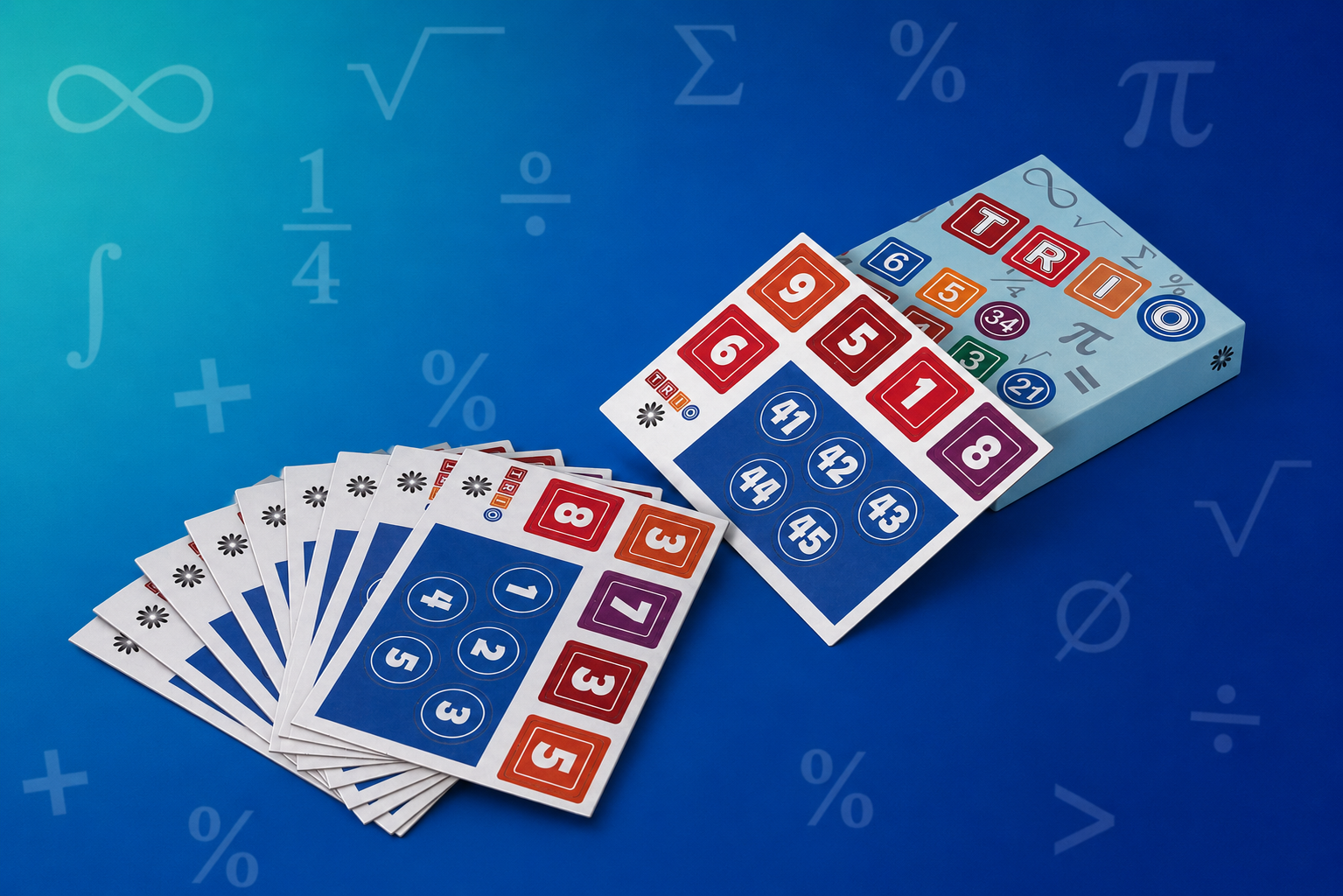 TRIO GAME COMPONENTS
The standard game includes coloured square number cards from 1 to 9 and round blue target cards ranging from 15 to 50.
All 49 coloured number cards are placed face up in seven rows and seven columns.
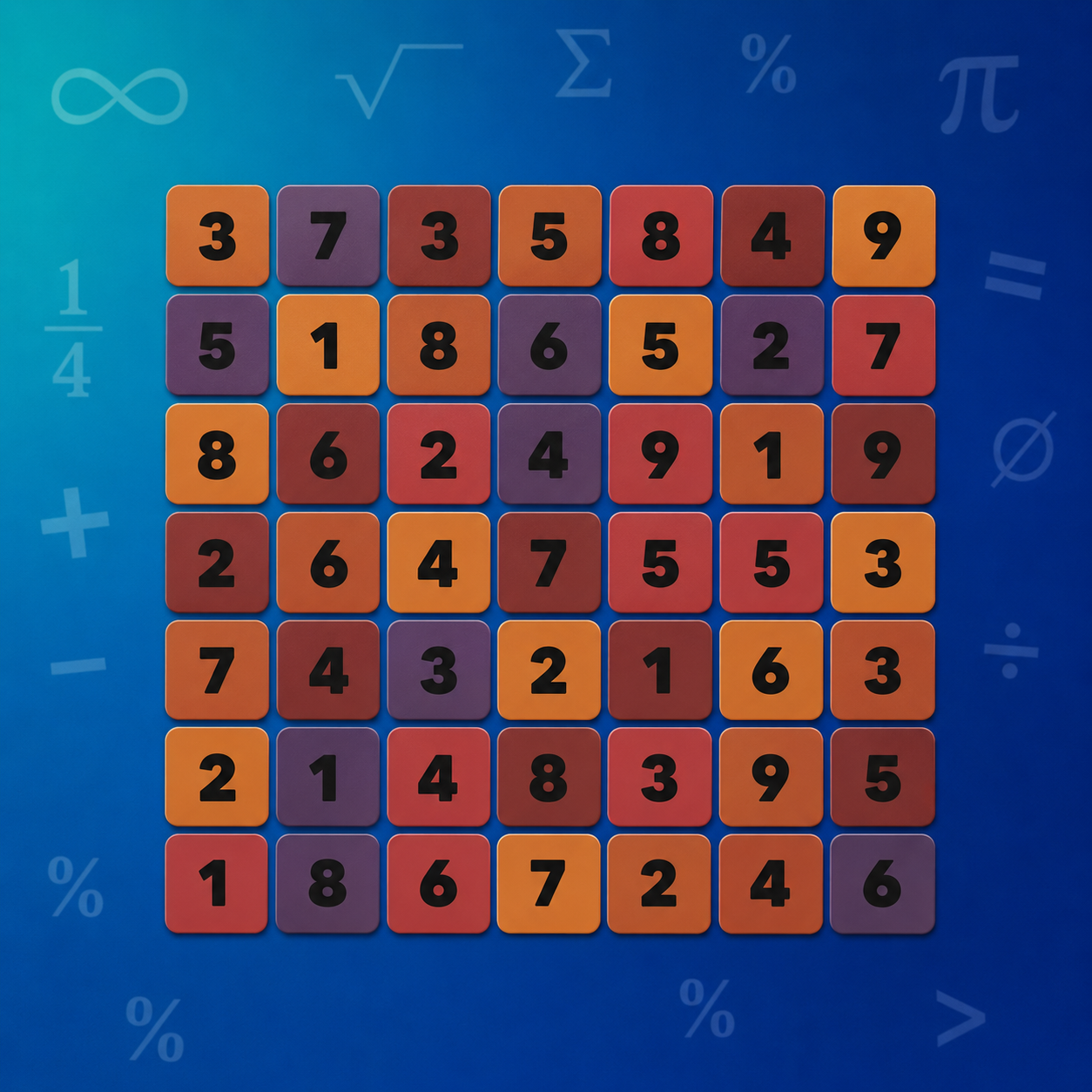
Players search the complete 7 × 7 grid for three neighbouring cards that can create the number shown on the blue target card.
A valid Trio may run horizontally, vertically or diagonally, but the three selected cards must remain connected in one continuous line.
The standard board is built before the first target is revealed.
Mix all coloured square cards thoroughly before arranging the board.
Place all 49 number cards face up in seven rows and seven columns.
Place the round target cards face down beside the board.
Turn over one blue card and place it where every player can clearly see the number.
Every solution must follow the same core rules.
Every calculation must be created with three coloured number cards.
The three cards must form an unbroken line horizontally, vertically or diagonally.
Addition, subtraction, multiplication and division may be combined to reach the target.
As soon as a player finds a correct solution, they must immediately say “Trio”.
The player must point out the three cards and explain the full calculation to everyone.
A correct solution earns the blue card. The player with the most blue cards wins.
More than one correct solution may exist on the board.
Find three connected number cards and combine them to produce exactly 40.
The player keeps the blue target card as a point.
A new blue target card is revealed and the next round begins immediately.
The round continues and the other players may keep searching for the correct answer.
The incorrect player receives a penalty point equal to the number shown on that target card.
The instruction guide includes several alternative ways to play Trio.
Instead of using one fixed calculation, add together the numbers printed on the collected blue target cards. The highest total score wins. The number cards may be shuffled and rebuilt after every game to create a fresh Mode 1 board.
View Mode 1 ExampleReverse the normal order of operations: complete addition or subtraction first, then multiplication or division.
View Mode 2 ExamplePlace coloured cards face down. A player draws a blue target and reveals coloured cards one by one while trying to reach that target. This mode is suitable for 2–4 players.
View Mode 3 ExampleArrange a selected number of cards in a row. Use each number in its exact order and insert mathematical symbols between them to create the target.
View Mode 4 ExampleSpread the coloured cards randomly with all numbers visible. Players choose three cards, or another agreed number of cards, and use each selected number only once to reach the target. The player who collects the most blue cards wins.
View Mode 5 ExampleEach alternative mode keeps Trio’s mathematical core while changing how targets, cards or calculations are handled.
Blue cards are added together at the end instead of being counted as single points.
Suppose one player has collected blue cards numbered 40, 44 and 42.
Parentheses show the changed operation priority used in this mode.
In the standard game, multiplication is normally completed first. Here, addition is completed before multiplication.
Players do not see the full board at the beginning of this version.
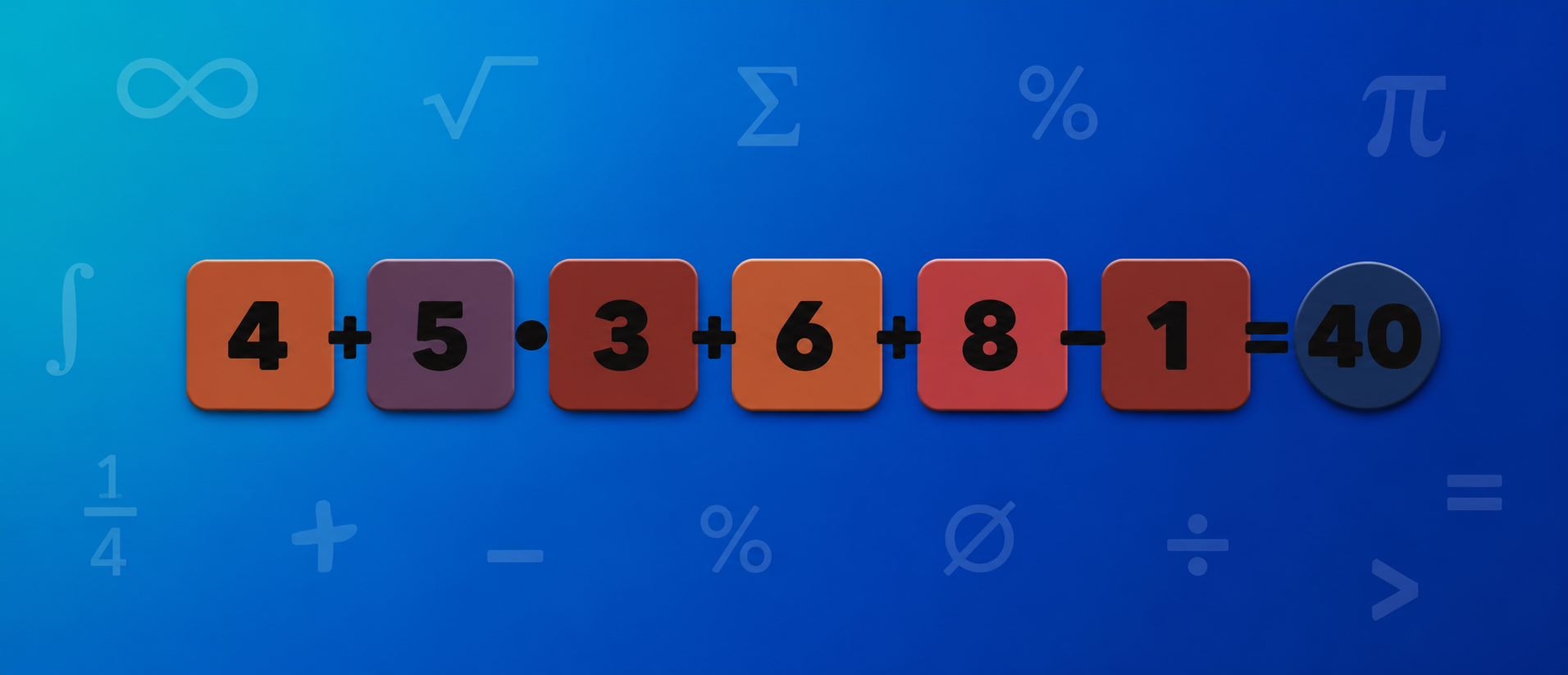 MODE 3 · HIDDEN CARDS
A player draws the target 40 and reveals coloured cards one by one.
Symbols may be inserted, but the sequence of the chosen cards cannot be changed.
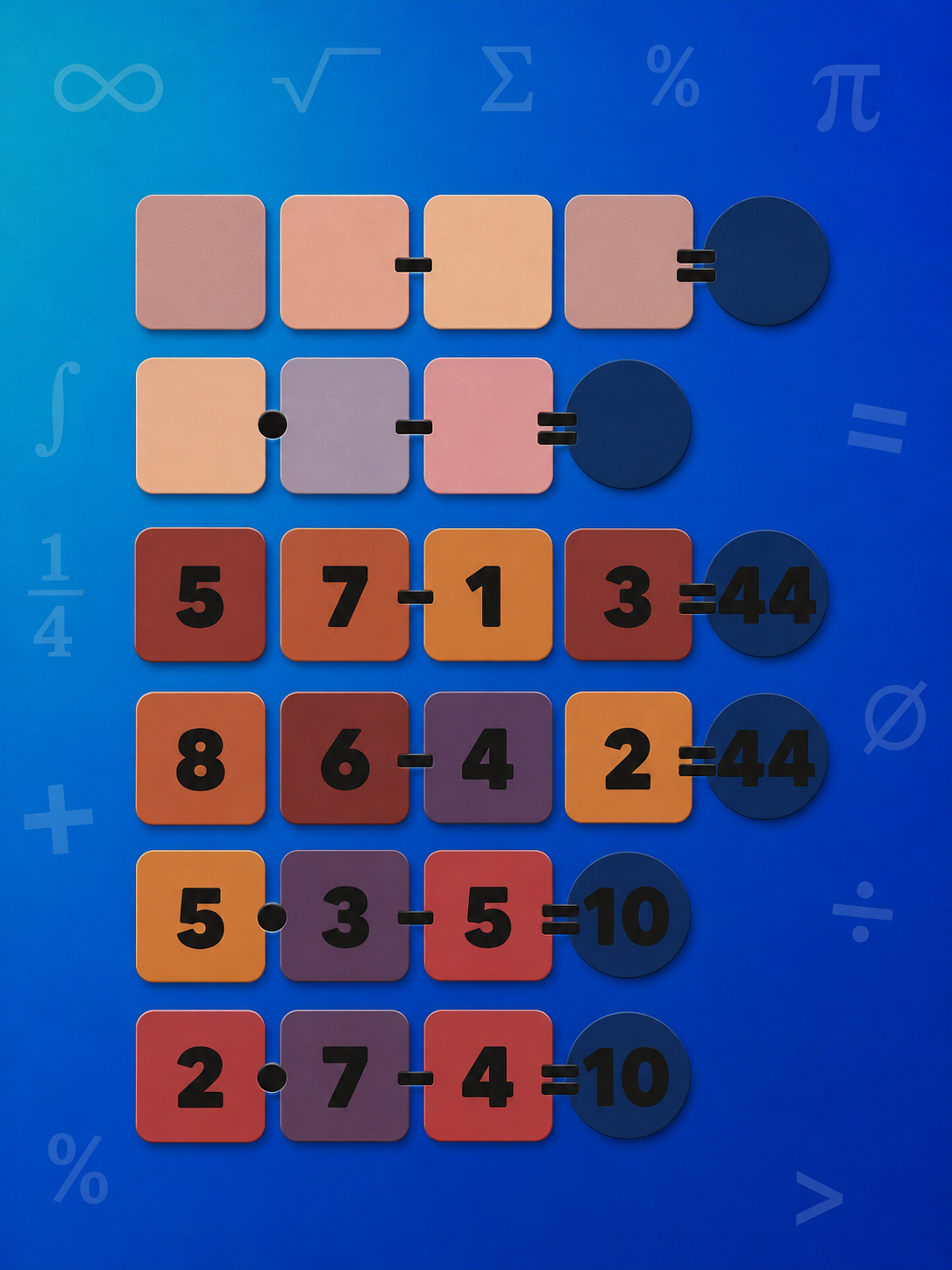 MODE 4 · SEQUENCE
Adjacent digits can be combined to form multi-digit numbers when the agreed format allows it.
Cards are spread randomly and each chosen number may be used only once.
In this example the selected cards are 4, 8, 7 and 3.
Trio rewards fast observation, mathematical creativity and strategic thinking. The rules are simple to understand, but every new board creates a completely different challenge.
Bring mathematics, observation and strategy together in one competitive game experience.